How to Explain Pet Loss to a Child, by Age: Honest and Gentle Wording

In this article
For many children, the death of a pet is the first time they come face to face with death. It can be a very sad moment, and it can also be an opportunity for a parent or caregiver to offer honesty, comfort and a model of how to grieve.
You do not need to be an expert. You need to be truthful, gentle and present. This guide offers general parenting guidance on how to talk with a child, with wording you can adapt. It is not a substitute for advice from a pediatrician or child therapist, who can help if you have specific concerns.
Some principles that apply to every age
Tell them the truth, in simple words. Use the words "died" and "dead." Euphemisms such as "went to sleep" or "went away" can confuse children and may make them afraid of bedtime or of being left. "Put to sleep" is especially risky for young children, so if your pet was euthanized, explain it plainly (see below).
Tell them yourself, soon, and in a calm, private place. Children can sense when something is wrong, and learning the news from an overheard conversation is harder than hearing it from you.
Let them feel what they feel. Children may cry, ask questions, seem unbothered, or go back to playing a minute later. All of these are normal. Children often grieve in bursts.
Do not hide your own sadness. Letting a child see that you are sad, and that you are okay, models healthy grieving. You do not need to fall apart, but you also do not need to pretend.
Expect repeated questions. Children often ask the same thing again and again as they process. Answer patiently and consistently.
Do not assign guilt. Reassure them that nothing they did, thought or said caused the death.
Ages and stages
Children's understanding of death changes as they grow. These are general patterns and not strict rules, since every child is different.
Toddlers and preschoolers (about 2 to 5)
Very young children often do not understand that death is permanent. They may ask when the pet is coming back, and ask again tomorrow.
Sample words: "Daisy died. That means her body stopped working and she cannot come back. She is not hurting anymore. We are very sad, and it is okay to cry."
Keep it short and concrete. Offer hugs and routine. Do not worry if they seem to move on quickly. They may revisit the loss later.
Early school age (about 6 to 9)
Children in this range usually begin to understand that death is permanent, and they often have lots of practical questions: What happens to the body? Does it hurt? Will it happen to me?
Sample words: "Our cat Pepper was very old and her body was very sick. The vet helped us so she would not be in pain. She died, and she cannot come back. It is normal to feel sad and to miss her."
Answer questions honestly. If you do not know, it is okay to say, "I do not know, but I can find out," or to share your family's beliefs, if you have them, about what happens after death.
Older children and pre-teens (about 10 to 12)
They understand death well and may feel it deeply but hide it. They may be embarrassed to cry in front of others.
Sample words: "I wanted to tell you before anyone else. Cooper died this morning. I know how much he meant to you. I am here whenever you want to talk, or if you would rather be alone for a while, that is okay too."
Offer private time and respect their space, and check in gently over the next days.
Teenagers
Teens may grieve in ways that look like irritability, withdrawal or humor. They may also prefer talking to friends rather than parents. Let them know they are welcome to talk any time, and do not force it. A pet may have been their companion through some hard years, and the loss can run deep.
If the pet was euthanized
Children can handle the truth when it is explained kindly. Make clear that euthanasia is a gentle medical choice made by a veterinarian and the family to stop the pet's pain when they could not get better.
Sample words: "Biscuit was very sick and the medicine could not fix it. The vet gave him a special medicine that made him fall into a deep sleep, and then his body stopped working. It did not hurt. It is not the same as the sleep we do every night, because he cannot wake up."
That last distinction matters. It helps prevent fear that sleep leads to death.
Should the child be there, or see the body?
There is no single right answer. Many families find that older children benefit from the chance to say goodbye, while younger children may do well with a drawing or a few words afterwards. If you are considering letting a child be present for euthanasia, talk with your veterinarian beforehand about what will happen so you can prepare the child. If a child does not want to be present, accept that. If your pet died at home and a child wants to see or touch the pet, you can prepare them in advance for how the pet may look and feel (still, cool, with eyes perhaps open).
Ways to say goodbye together
Rituals give children something to do with big feelings. A few ideas that families use:
- Draw or write a card or letter to the pet and put it with the pet, or keep it.
- Share favorite memories at dinner, taking turns.
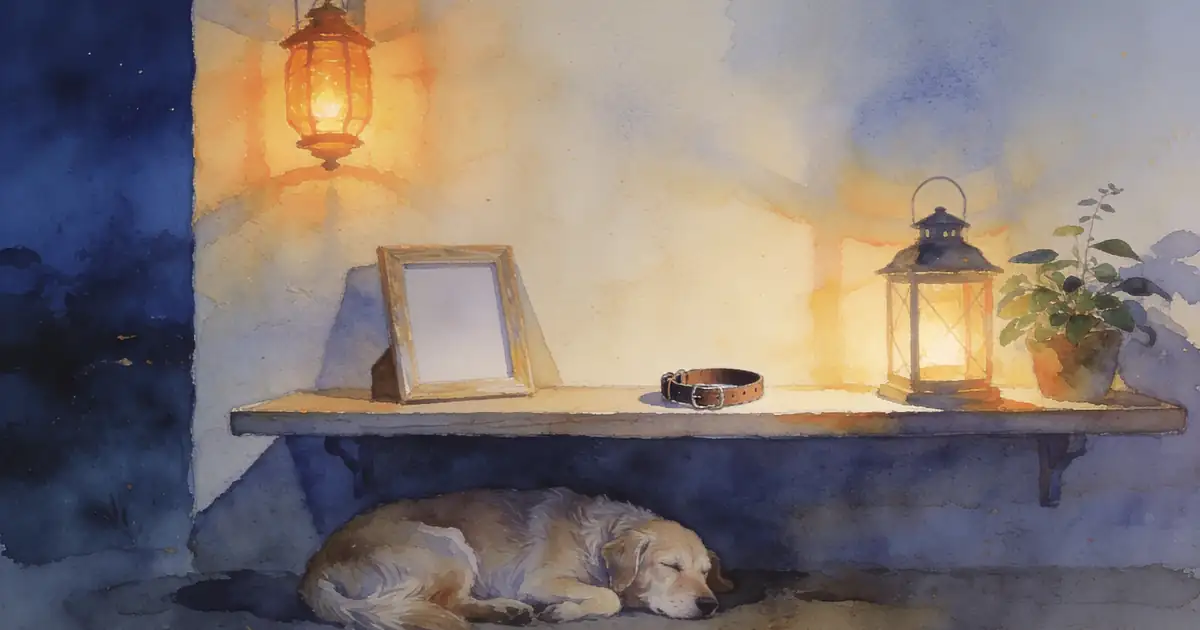
- Make a memory box with a collar, a favorite toy, a photo and a paw print.
- Hold a small ceremony, in the backyard or at home, with a candle, a few kind words and flowers. Check local rules if you plan a burial. See our pet memorial ideas at home for more ideas.
- Plant something and care for it together.
- Make a photo collage to hang in the child's room.
Let the child lead. If they want to do nothing, that is okay. If they want to do something elaborate, that is okay too, within reason.
Books can help
Picture books about losing a pet can give children words and a safe way to start a conversation. Your local library or children's librarian can recommend titles for your child's age. Read the book yourself first so you know what to expect.
What to watch for
Most children cope well with the support of caring adults. Sadness, trouble sleeping, clinginess and mood changes can all be normal for a few weeks. Consider talking to your pediatrician or a mental health professional if you notice:
- Intense sadness or withdrawal that does not ease over time.
- Persistent trouble sleeping, eating or concentrating at school.
- Statements that suggest they blame themselves, or that they want to die. If a child talks about wanting to hurt themselves, seek help right away. In the United States you can call or text 988.
- A big change in behavior that worries you.
What about a new pet?
Many parents wonder whether to rush out and get a new one. A new animal does not replace the old one, and children often need time. It can help to wait until the family has had time to grieve, and to include the child in the decision. Some children feel disloyal when a new pet arrives, so it helps to say, "Loving a new pet does not mean we love Max any less."
And you
You are grieving too. You do not have to hide it, and you do not have to be strong all the time. Letting a child see you cry, remember and keep going is one of the most useful things you can offer them. Be kind to yourself as well; our guide to how to cope after losing a dog may be a comfort for the adults in the house too.
This article offers general information and comfort. It is not veterinary, medical or mental health advice. See our disclaimer.
Related reading
Memorials and keepsakes
21 Pet Memorial Ideas You Can Do at Home (Many Cost Almost Nothing)
Simple, heartfelt ways to remember a dog, cat or other pet at home, from a memory shelf and paw print keepsakes to planting a garden, writing a letter or holding a small ceremony.

Coping with grief
How to Cope After Losing a Dog: What Helps in the First Days, Weeks and Months
Losing a dog can feel like losing a family member, because it is. A compassionate guide to what grief can look like and what helps, from the first night to the months after.

Coping with grief
How to Cope With Losing a Cat: Gentle Guidance for the Quiet Grief
Losing a cat leaves a quiet kind of grief. Learn what you may feel, why guilt is so common, how to look after yourself and your other pets, and ways to remember your cat.