Pet Memorial Craft Ideas for Kids: Gentle Ways to Say Goodbye Together
In this article
When a pet dies, children often feel the loss as strongly as adults, even if they show it differently. They may cry, go quiet, ask the same question again and again, or seem to carry on playing as if nothing has happened. All of these can be normal.
Making something can give a child a way to express feelings they may not have words for. This guide offers simple craft ideas, and ways to use them to open gentle conversations. If you have not yet talked with your child about what happened, our guide to how to explain pet loss to a child is a good place to start.
Before you begin
A few principles help these activities feel safe:
- Let the child lead. Offer a few ideas and let them choose, or let them say no. Some children want to make something right away, and others need days.
- There is no right way to make it. A scribble is as meaningful as a careful drawing. Resist the urge to fix or improve it.
- Keep it short. Younger children often manage 15 to 20 minutes before they need to move. You can always come back.
- Be honest and simple. Use clear words like "died" rather than "went to sleep", which can confuse young children and make bedtime frightening.
- Feel feelings with them. It is fine for them to see you sad. You can say, "I miss them too. Making this helps me remember."
Ideas for younger children (about 3 to 6)
Young children think in concrete terms and understand best through doing.
- Drawing a picture. Ask, "What did you like to do together?" and let them draw it. Write down anything they say next to the picture, in their words.
- Handprint or paw print art. Use washable, child-safe paint to make a handprint, then add a small paw print with a finger. Our article on DIY paw print keepsake ideas has more methods.
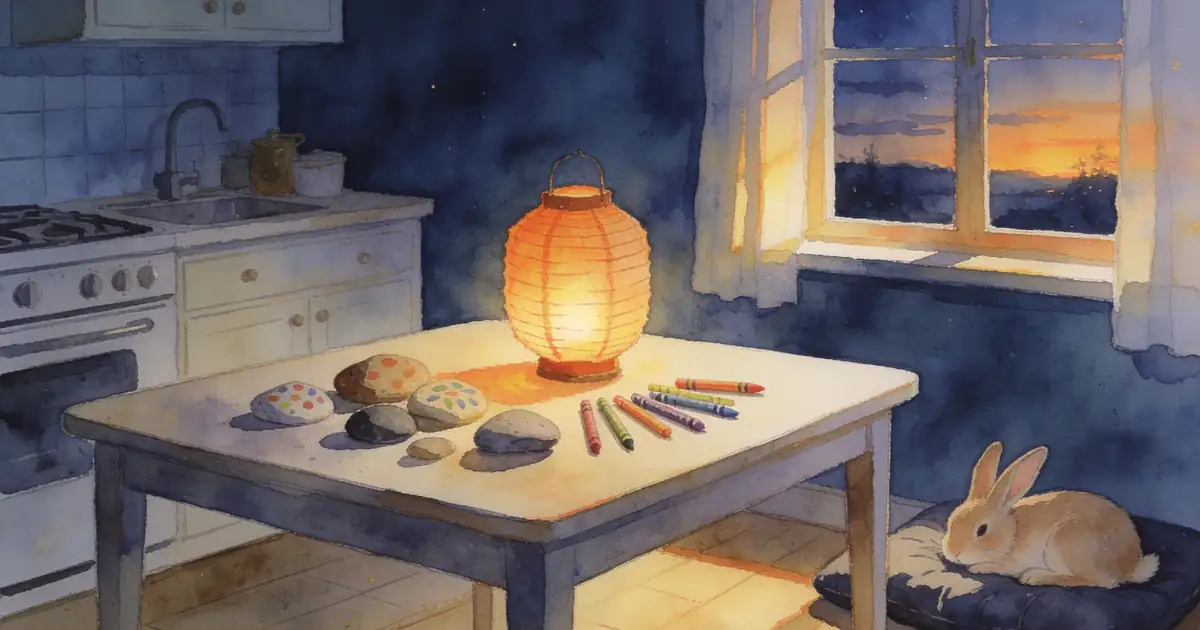
- Painting a stone. Smooth rocks and child-safe paint are all you need. The stone can go in the garden or on a shelf.
- A "goodbye" card. Fold a piece of paper and let the child decorate it. Some children like to tell you what to write inside.
- A box of favorite things. Let them choose items to keep in a shoebox: a toy, a photo, a leaf, a drawing.
Ideas for school-age children (about 7 to 11)
Older children can handle more detailed projects and may like to feel they are doing something for their pet.
- A memory jar. Cut small strips of paper. Each family member writes or draws one memory per strip. Fold them into a jar. You can add to it for months and read a few on hard days.
- A scrapbook or photo page. Choose several photos and let the child decorate the page with stickers, drawings and captions.
- A story or comic. Some children like to write "the adventures of" their pet, with funny or sweet moments.
- A small memory garden. Plant a flower in a pot or garden bed. The child can water it and watch it grow. Ask a local nursery for plants that suit your climate.
- A paper lantern. Decorate a paper bag or jar with tissue paper and place a battery tea light inside. It makes a soft glow for an evening remembering together.
- A "things I'll always remember" list. Take turns adding items. It can be funny, serious or both.
Ideas for tweens and teens
Older kids may feel too old for crafts or prefer privacy. Offer options without pushing:
- A playlist of songs that remind them of their pet.
- A photo collage or digital slideshow they put together themselves.
- A journal or letter. Our guide to writing a goodbye letter to your pet has prompts you can share.
- A donation or helping act, such as collecting supplies for a shelter, if that feels meaningful to them.
- A quiet place to be. Sometimes the best thing you can do is say, "I am here if you want to talk," and then leave room.
A small goodbye ceremony
Children often find rituals reassuring. A ceremony does not need to be elaborate. It can be five minutes in the garden or the living room.
You might:
- Gather as a family and place the child's drawing or stone in a special place.
- Ask each person to share one thing they loved about the pet.
- Light a battery candle or lantern.
- Read a short note that the child wrote.
- Share a hug or a quiet moment.
Let the child decide how much to take part. If they want to say something, welcome it. If they want to stay quiet, that is fine too.
Talking while you make things
Crafting side by side can make conversation easier because no one has to look directly at each other. A few questions that sometimes help:
- "What was your favorite thing about them?"
- "What do you miss the most?"
- "What was the funniest thing they ever did?"
- "Is there anything you wish you could tell them?"
If the child asks hard questions, such as why the pet died or whether it hurt, answer as honestly and simply as you can, within what you know. It is fine to say, "I do not know, and I am sad about that too."
What to expect afterward
Children grieve in bursts. They may seem fine for a while and then suddenly cry at bedtime, or be angry, clingy or restless. Younger children may return to earlier behavior, like needing a night light. Many of these changes ease with time, love and routine.
Gentle things you can do:
- Keep routines steady, such as meals, school and bedtime.
- Revisit the craft later. Looking at the memory jar or the painted stone can open a conversation.
- Let them know it is all right to feel happy sometimes too. Some children feel guilty if they laugh.
- Mention the pet by name now and then. Children often like to know it is all right to remember.
If your child's distress is intense or lasts a long time, or if you notice changes in sleeping, eating or schoolwork that worry you, talk with your pediatrician, a school counselor or another professional. You do not have to manage everything alone.
A note about surviving pets
If you have other pets, your child may worry about them. Reassure them with simple, honest words. They may also like to make something special for the pets who are still here, such as a new bed or a handmade toy.
If a keepsake would help
Some families like a simple ready-made keepsake as well as the things the children have made themselves. Our shop, Evermore Paw Co, has gentle memorial prints and posters and paw-heart ornaments. They are designs rather than personalized items, and a drawing by your child may be far more precious. Many families hang a child's picture right next to a print or ornament.
The most important thing
Children do not need perfect words or perfect crafts. They need to know that their feelings are welcome, that they are loved, and that remembering their pet is a good thing to do. A drawing, a painted stone or a jar of memories can be a small bridge between grief and comfort.
This article offers general information and comfort. It is not veterinary, medical or mental health advice. See our disclaimer.
Related reading
Children and pet loss
How to Explain Pet Loss to a Child, by Age: Honest and Gentle Wording
How to tell a child that a pet has died. Age-by-age guidance, sample words, what to avoid, how to help them say goodbye, and when to check in with a professional.
Memorials and keepsakes
DIY Pet Paw Print Keepsake Ideas: Ink, Clay, Salt Dough and More
Simple ways to make a paw print keepsake at home, with a living pet or after they have passed, including clay, salt dough, ink on paper and ideas for displaying it.
Memorials and keepsakes
21 Pet Memorial Ideas You Can Do at Home (Many Cost Almost Nothing)
Simple, heartfelt ways to remember a dog, cat or other pet at home, from a memory shelf and paw print keepsakes to planting a garden, writing a letter or holding a small ceremony.