When Another Pet Is Grieving: How to Help a Surviving Dog or Cat

In this article
When a pet dies, you may notice that another animal in the home is behaving differently. The dog who used to chase the cat is lying by the door. The cat who shared a bed with your late dog is calling through the house. You may feel a second layer of grief for the one who is left, and wonder how you are supposed to help.
We do not know exactly what animals understand about death, and anyone who claims to know precisely is guessing. What we do know is that animals notice changes in their routines, in their housemates, and in us. Here is what you may see and what tends to help.
What you might notice
Every animal is different, and some show very little change. Others may:
- Search or wait. Looking for the other pet, checking their usual spots, waiting by the door or the window.
- Call out or vocalize. Whining, howling, meowing more than usual.
- Change their appetite. Eating less, or in some cases, more.
- Sleep differently. Sleeping more, or seeming restless at night.
- Become clingy. Following you around, wanting more contact.
- Withdraw. Hiding, seeming flat or less interested in play.
- Change habits. Alterations in grooming, toileting or activity.
Some of these changes are likely a response to a disrupted household, to a missing companion, and to the emotions in the home. Your own grief is part of the picture: animals often pick up on your mood, your tone and your altered routines.
Why you should not assume it is "just grief"
Any of those signs can also be a symptom of a medical problem. A pet who stops eating, who becomes lethargic, has vomiting or diarrhea, seems in pain, or whose behavior changes sharply should be seen by a veterinarian. It is also worth a call if the changes persist for more than a short while, or if you are not sure. If the pet who died had an infectious illness, mention that to your vet, too.
Do not wait to see whether grief explains it. A call or a check-up is a kindness to both of you.
What can help
Keep routines steady. Feed, walk and play at the usual times if you can. Predictability is comforting, and it also helps you.
Offer a little extra attention. Extra cuddles, gentle play or a quiet walk can be reassuring. Follow your pet's lead. Some animals want closeness. Others want space.
Do not force it. If your pet does not want to play, do not push. If they want to be near you, let them.
Keep the environment calm. Avoid big changes such as rearranging furniture, moving the food bowls or having lots of visitors, unless needed. Familiar scents and settings can help.
Consider whether to leave out familiar items. Some people leave the other pet's bed or blanket for a while. Others put it away because it makes everyone sadder. There is no evidence-based rule; choose what seems to help the animal and you.
Let them see the body, if it fits the situation. Some people allow a surviving pet to sniff or sit with the body after a pet has died at home, believing it helps them understand. This is a personal choice, and it should be calm, supervised and brief. If the death happened at the vet's, it is not something to worry about.
Add enrichment. New toys, puzzle feeders, short training sessions or a new walking route can give a bored or sad animal something to focus on. Introduce changes gently.
Look after yourself. Pets pick up on stress. Taking care of your own meals, sleep and support will help the household.
Should you get a companion for the surviving pet?
This is a common impulse, and it is worth thinking through carefully. A new animal may bring joy, or it may add stress for a grieving or older pet. Some animals welcome company quickly, while others need a long time, and some would prefer to be the only pet. If you are considering it, talk to your veterinarian or a shelter about your pet's temperament, and see our guide on whether to get another pet after a loss. Make sure you are choosing for the right reasons, and do not use a new animal to try to fix the grief.
If the surviving pet is a cat
Cats can be quiet about stress. Watch for changes in eating, drinking, litter box habits, grooming, hiding, or vocalizing, and contact your vet if you notice any. Maintain their routines and give them places to retreat and feel safe. Our guide on losing a cat includes some notes on caring for other pets as well.
If the surviving pet is a dog
Dogs often respond to extra walks, play and company. A dog who is off their food, restless at night or very quiet should be checked by a vet if it continues. Time with other friendly dogs, if your dog enjoys it, may help, but do not force it.
If you have children
Children may worry about the surviving pet too. It can help to let them take part in comforting the animal, with supervision. Our guide to explaining pet loss to a child has ideas for including children in remembering.
Grief that you share
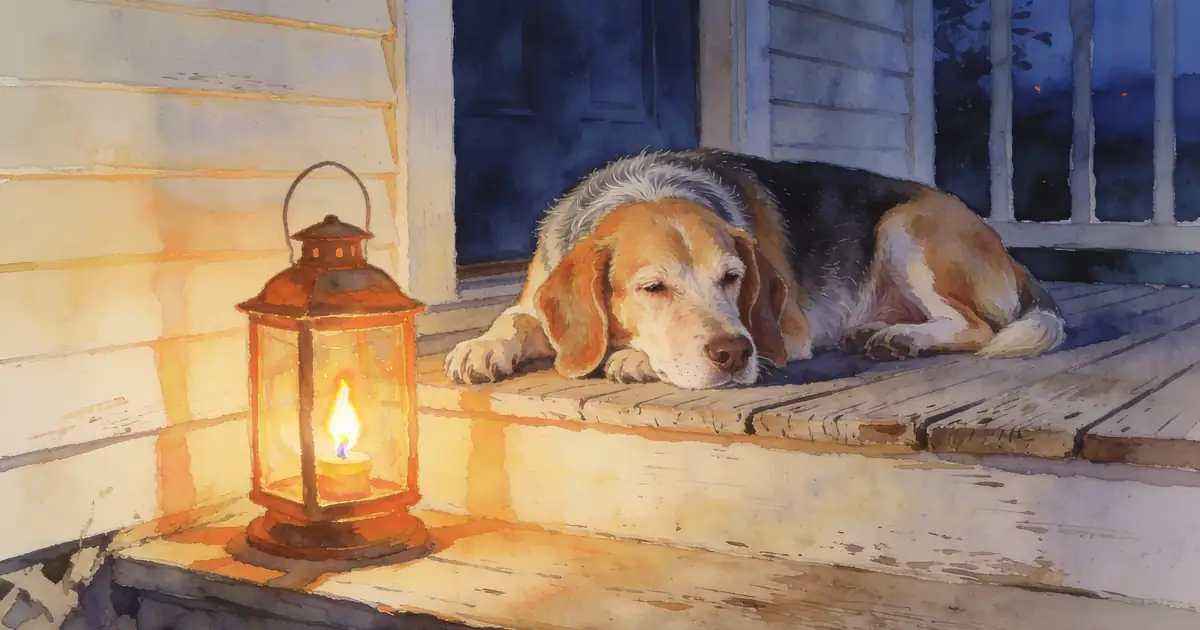
There can be something quietly comforting about grieving alongside another animal. You are both missing the same one. Sitting together on the couch, taking a slow walk or simply being in the same room can be a small mutual comfort. You do not have to say anything.
When to ask for help
- Your pet shows signs of illness or pain.
- Changes persist or worsen.
- Your pet is not eating or drinking.
- Your pet is showing signs of severe anxiety, aggression or distress.
- You are worried or unsure.
Call your veterinarian. They may suggest an exam, or a behavior consultation if needed. If your own grief feels overwhelming and you are struggling to care for yourself or your remaining pets, reaching out to a doctor or counselor is a good idea too.
In time
Many animals gradually settle into new patterns. Some bond more closely with their people. Others adjust quietly. As you and your household find a new rhythm, the sense of loss may soften, even though the missing one is never forgotten.
This article offers general information and comfort. It is not veterinary, medical or mental health advice. See our disclaimer.
Related reading

Coping with grief
How to Cope With Losing a Cat: Gentle Guidance for the Quiet Grief
Losing a cat leaves a quiet kind of grief. Learn what you may feel, why guilt is so common, how to look after yourself and your other pets, and ways to remember your cat.

Coping with grief
Should You Get Another Pet After a Loss? How to Know When You Are Ready
Wondering whether to get a new dog or cat after yours has died? Questions to ask yourself, signs you might not be ready, how to involve family, and how to honor the pet you lost.
Coping with grief
How to Cope After Losing a Dog: What Helps in the First Days, Weeks and Months
Losing a dog can feel like losing a family member, because it is. A compassionate guide to what grief can look like and what helps, from the first night to the months after.